


Almond Oil vs Almond Milk for Skin: Which One Is Right for Your Skin's Needs?

You have heard about both almond oil and almond milk in the context of skincare, and you know that both have their benefits. But when it comes to choosing, the answer is less clear: do they do the same thing, or does each one have a different role? And is it necessary to use both at once?
This article offers a direct comparison of the difference between almond oil and almond milk for skin, a practical guide for choosing based on your skin's needs, and the best way to use them, either separately or together in one routine.
Both From the Almond, but Different: A Brief Orientation
Before getting into the comparison, there is one question that comes up often and is worth clarifying first: what is the difference between regular almond oil and sweet almond oil? The answer is straightforward, in the context of skincare:
-
Sweet almond oil (Prunus amygdalus dulcis) is the correct choice and is the established standard in the beauty industry.
-
Bitter almond oil contains compounds that are not safe for topical use and is not used in cosmetic products.
For a deeper understanding of the benefits of sweet almond oil for skin, you can read the full guide in our article on benefits of almond oil for skin.
Back to the main question, what is the difference between almond oil and almond milk? Although both come from the same almond nut, almond oil and almond milk are processed differently and work through different mechanisms on the skin.
Almond oil is the lipid fraction obtained through cold pressing, rich in fatty acids and Vitamin E. Almond milk, on the other hand, is a water-based extract, lighter in texture, containing proteins, natural sugars, and a different vitamin profile. This difference in composition is what determines how each ingredient works on the skin, and why the two are not in competition with each other, they are complementary.
Side-by-Side Comparison: The Difference Between Almond Oil and Almond Milk for Skin
|
Aspect |
Almond Oil |
Almond Milk |
Recommendation / Best For |
|
Texture |
Richer, lightly oily |
Lighter, absorbs quickly |
Dry skin → Oil · All skin types → Milk |
|
Primary function |
Emollient, locks moisture at the skin's surface |
Humectant + light emollient, hydration and firming support |
Intensive moisture → Oil · Firming + hydration → Milk |
|
Key ingredients |
Oleic & linoleic fatty acids, Vitamin E |
Almond protein, natural sugars, Vitamin E |
Depends on skin needs |
|
Skin firming |
Supports indirectly through skin nourishment |
More direct, through almond protein working on elasticity |
Specific firming → Milk |
|
Role in routine |
Cleansing step (shower oil) or lightweight moisturiser |
Moisturising step (milk concentrate, body milk) |
Both can be used together |
|
Best skin types |
Dry, sensitive, all skin types |
All types including normal and combination |
Neither is "better", their roles are different |
The Most Important Difference to Understand
The key insight from the table above is this: almond oil and almond milk are not competing with each other. They work at different levels. Almond oil is a lipid, it works at the skin's surface layer to lock in moisture and strengthen the skin barrier. Almond milk, on the other hand, is a protein and water-based extract, it works differently, supporting hydration and skin elasticity in a way that almond oil alone cannot.
This shifts the question from "which one should I choose?" to "when should I use each one?", and the answer turns out to be more straightforward than it might seem, as illustrated in the table above.
For a complete guide to the benefits of each ingredient, our article on benefits of almond milk for skin is a useful complement to what you have read here.
Which One to Choose? A Guide Based on Your Skin's Needs
Choose Almond Oil If...
Almond oil is the most fitting choice in the following situations:
-
Your body skin feels very dry, tight after showering, or has rough patches on the elbows and shins, the emollient lipid profile of almond oil is the most direct solution for this condition.
-
You want a body cleanser that does not strip your skin's natural moisture, Amande Sublime Softening Shower Oil, formulated with 40% natural oil based on sweet almond oil, works as a cleansing step that nourishes at the same time.
-
You are looking for a lightweight body oil or face oil for daily nourishment that does not leave a heavy feeling.
Choose Almond Milk If...
Almond milk in a body care formulation is the more suitable choice in the following situations:
-
You want firming and smoothing benefits alongside hydration, the almond protein in the Smoothing Milk Concentrate works together with the Silicium Complex for clinically measurable results.
-
Your skin needs moisture that lasts, particularly if you spend most of your day in air-conditioned environments and need consistent moisture protection throughout the day.
-
Your skin type is normal to combination and you want hydration without heaviness.
Use Both Together: The Ideal Routine
The best answer is often not a choice between the two, but using both within one complementary routine.
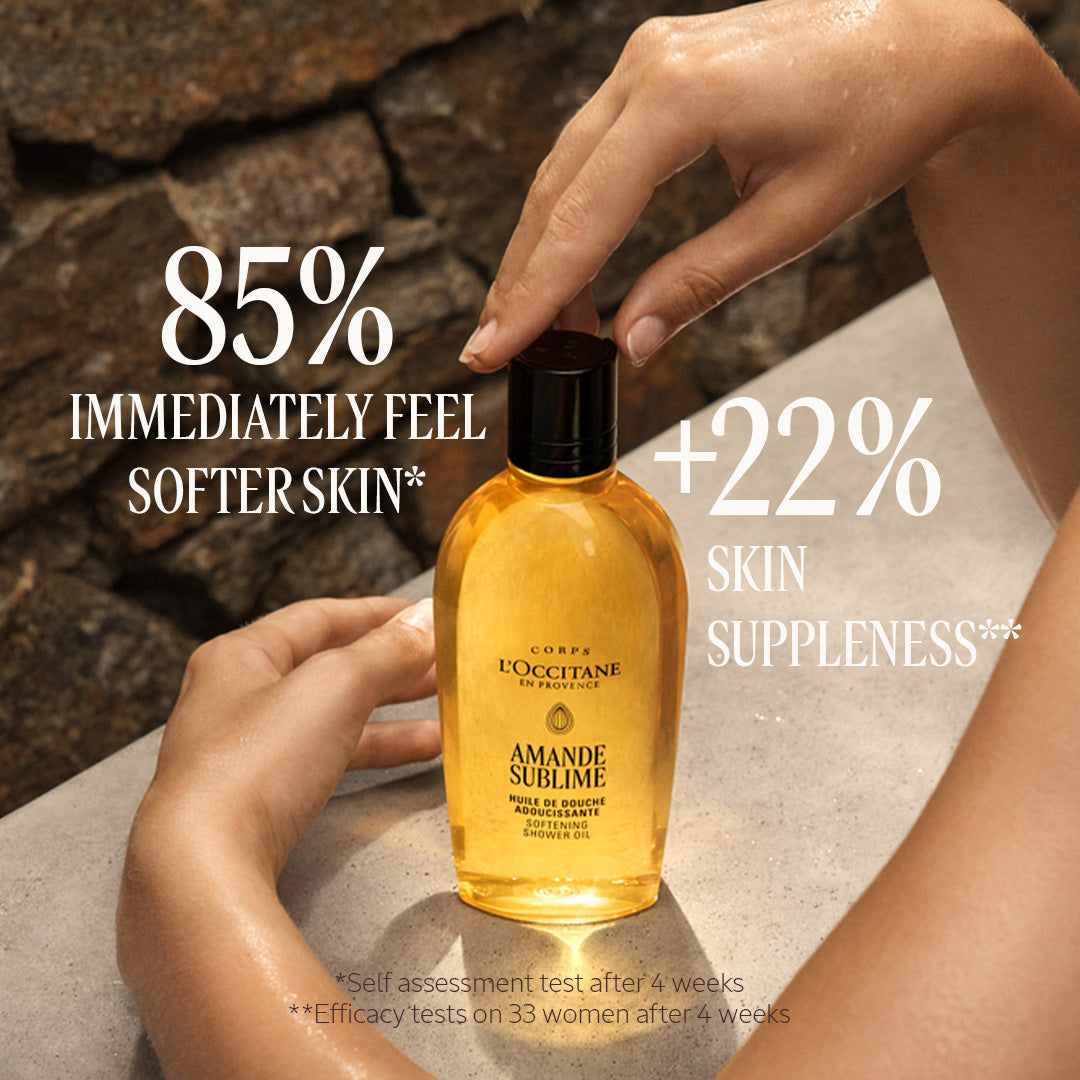
In the most optimal Amande Sublime routine from L'Occitane, Amande Sublime Softening Shower Oil takes the cleansing step, cleansing and nourishing the skin with almond oil during the shower.
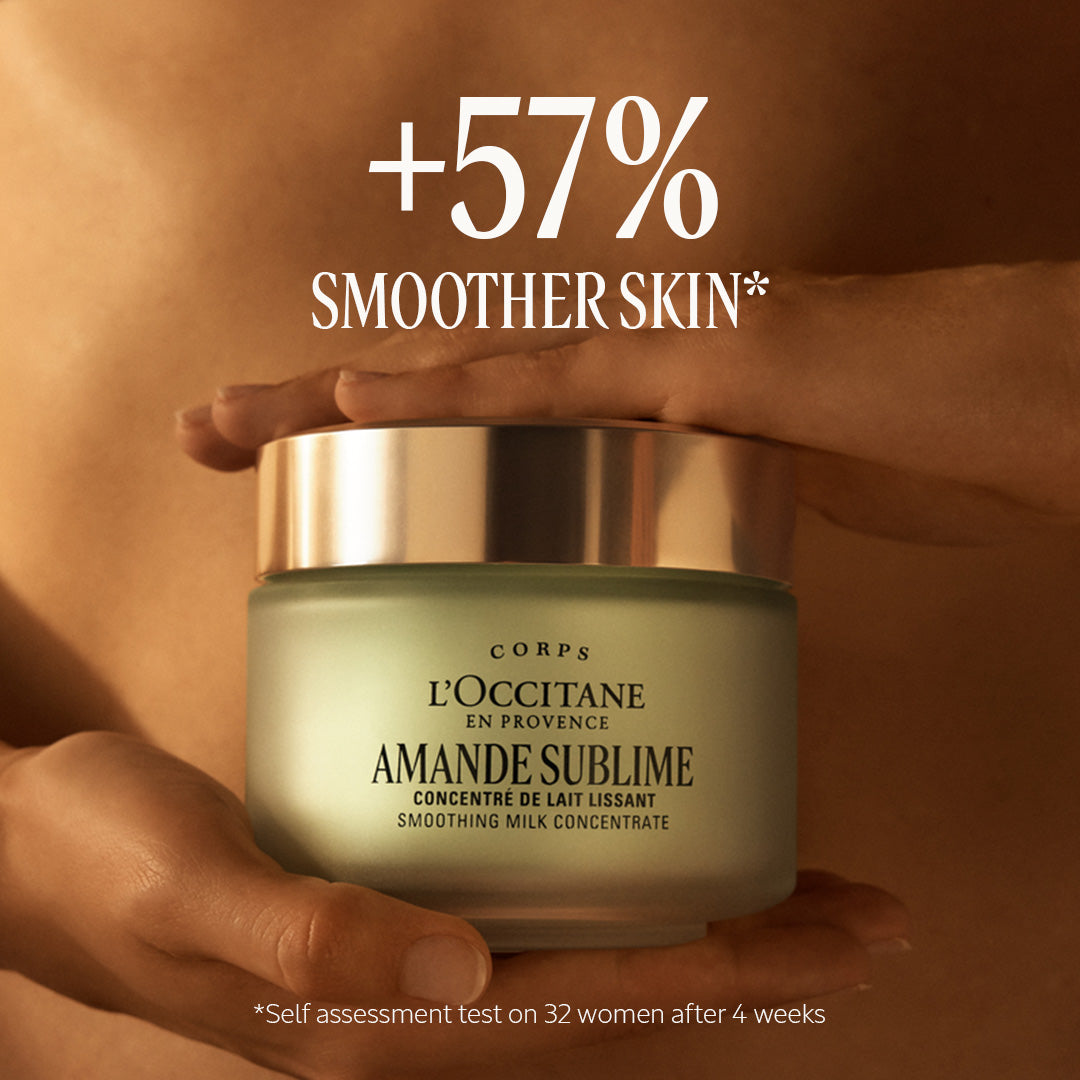
Afterward, Amande Sublime Smoothing Milk Concentrate is applied to still-damp skin to lock in moisture while delivering firming benefits through almond milk protein and the Silicium Complex.
Two ingredients, two steps, two distinct roles, yet both working in the same direction: supporting body skin that feels healthy, comfortable, and consistently moisturised throughout the day. For a complete guide to building an optimal body care routine, you can explore the full L'Occitane Almond Collection.
Silicium Complex: The Thread That Connects Them Both
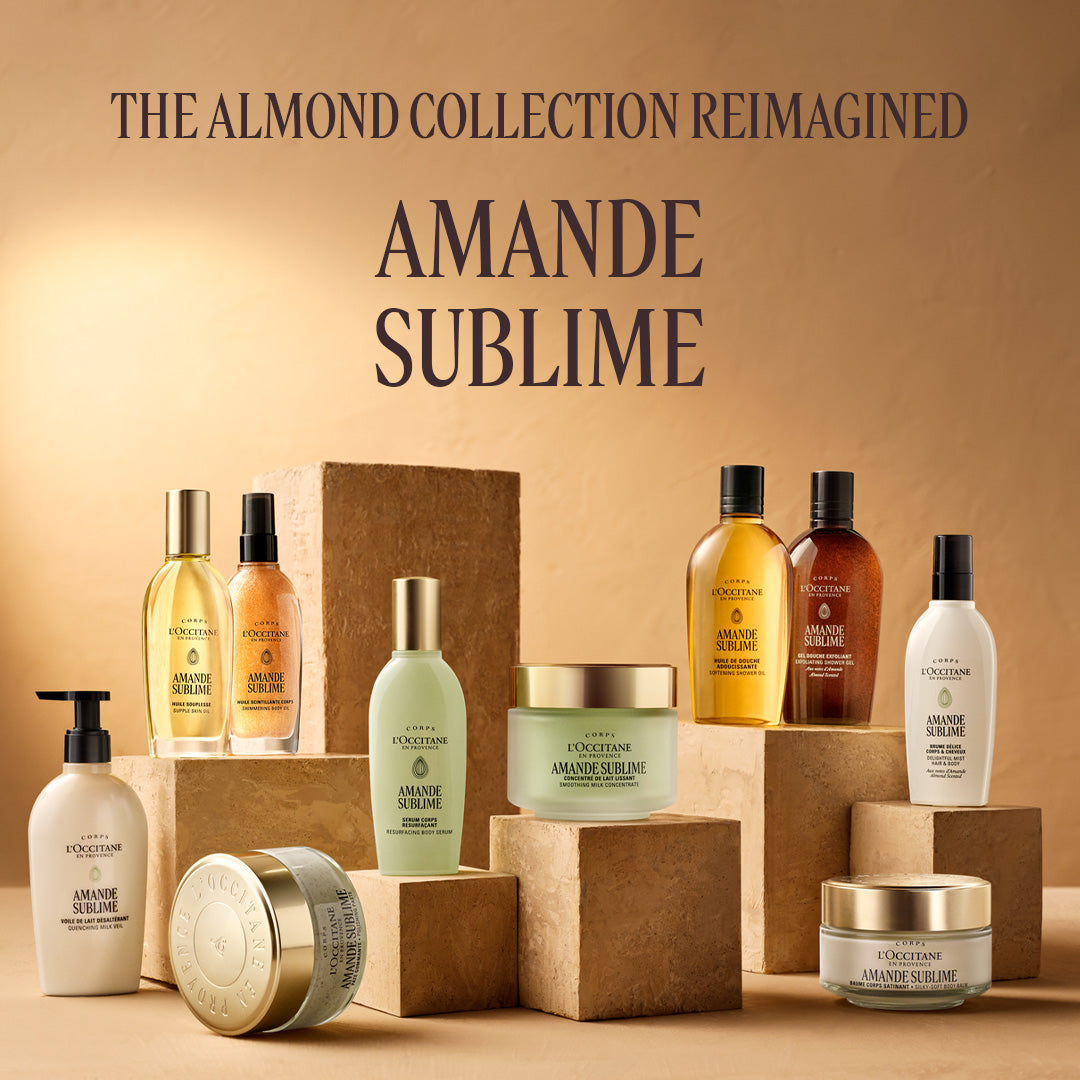
There is one element that makes the Amande Sublime range from L'Occitane uniquely cohesive, the Silicium Complex is present across the entire range, in products based on both almond oil and almond milk. Within the almond milk format, almond protein works together with the Silicium Complex to deliver measurable firming benefits. Within the almond oil format, the Silicium Complex works alongside the lipids to support skin softness and smoothness.
This is what makes the Amande Sublime range function as a coherent system, not simply a collection of individual products. Each product has a different role, but all are connected through the same underlying technology.
Almond oil and almond milk are not ingredients that replace each other, they are complementary ingredients with distinct roles in a body care routine. Understanding this difference allows you to make more intentional, better-informed choices. The Amande Sublime range from L'Occitane is the only body care range that brings both together in a single system designed to work in unison, from the cleansing step through to moisturisation. To explore the benefits of each ingredient in more depth, read our articles on benefits of almond oil for skin and benefits of almond milk for skin.
FAQs About the Difference Between Almond Oil and Almond Milk for Skin
Is almond oil good for the skin?
Yes, almond oil is a highly effective skincare ingredient, particularly as an emollient that helps lock in moisture, soften skin texture, and support the skin barrier. For a full explanation of the benefits of almond oil for skin, read our guide on benefits of almond oil for skin.
What is the difference between regular almond oil and sweet almond oil?
In the context of skincare, sweet almond oil is the correct and standard choice used in the beauty industry. Bitter almond oil contains compounds that are not safe for topical use and is therefore not used in cosmetic products. When a product lists “almond oil” as an ingredient, it almost always refers to sweet almond oil.
What is almond milk good for in skincare?
Almond milk in a body care formulation is beneficial for long-lasting hydration, supporting skin firmness and elasticity through its protein content, and soothing sensitive skin. For a more in-depth explanation, read our article on the benefits of almond milk for skin.
Can almond oil and almond milk be used together?
Yes, and this is actually the most optimal approach. The two ingredients serve different roles within a routine: almond oil works best during the cleansing step or as a body oil, while almond milk in a milk concentrate format is most effective during the moisturising step after showering. Used together, they complement each other for more complete results.
Which is better for dry skin, almond oil or almond milk?
For very dry skin, almond oil provides the most direct emollient benefit, as its rich fatty acid profile helps reinforce the skin’s protective layer. Almond milk in a concentrate format is also effective for dry skin, with the added benefit of supporting firmness. Combining both within one routine offers the most comprehensive care for dry skin that needs both moisture and firmness.


