


How to Care for Dry Hands: A Complete Guide to Keeping Them Soft Every Day

Hands are among the most used parts of the body, yet among the most overlooked in a daily care routine. They are exposed to water, soap, household chemicals, and environmental elements every single day, far more than any other part of the body. The result is skin that dries out quickly, feels rough, and can even show signs of aging sooner than expected.
The good news is that caring for dry hands does not need to be complicated. What is needed is understanding three simple things: choose the right cleanser, apply hand cream at the most effective moment, and build a consistent habit. This guide provides practical steps you can start today. For a deeper understanding of why hands dry out, read our article on causes of dry hands and feet.
Why Does Hand Skin Dry Out More Easily?
Before addressing how to care for dry hands, it helps to understand why the skin on the hands is more vulnerable to dryness. The skin on the back of the hands is thinner and has significantly fewer sebaceous glands than facial skin. This means hands produce less natural protective oil to retain their own moisture.
On top of that, hands are used for almost every daily activity. Washing with soap strips the protective oil layer. Contact with detergents, floor cleaners, and dishwashing liquid damages the skin barrier faster. Air conditioning at the office continuously lowers the moisture level around the hands without being obvious. The result is skin that loses moisture constantly without enough time to recover.
Understanding this is important because effective dry hand care needs to address all these layers, not simply apply moisturiser occasionally.
How to Care for Dry Hands Correctly
Step 1: Choose a Hand Soap That Does Not Strip Moisture
The choice of soap is the most impactful starting point that is most often overlooked. Soaps with strong detergents or synthetic fragrances strip the skin's natural oils more aggressively than necessary for cleaning.
What to look for: a gentle formula, free from harsh fragrances, and pH-balanced. Soap formulated with moisturising ingredients such as shea butter or glycerin cleanses the hands without leaving a tight, dry feeling afterwards.
What to avoid: antibacterial soaps with high alcohol content for everyday use, heavily foaming soaps, and washing hands with very hot water. Hot water dissolves natural oils much faster than lukewarm water.
Step 2: Apply Hand Cream Within 2 Minutes of Washing Your Hands
This is the single most impactful habit change for dry hands. Every time you wash your hands, the protective oil layer is stripped away.
Correct application technique: dispense hand cream about the size of a pea onto the back of one hand. Rub both backs of the hands together to spread the product, then massage gently into all areas including between the fingers, cuticles, and fingertips. Apply a little extra to the driest areas such as knuckles and around the nails.
Practical tip: keep hand cream near the sink, on your work desk, and in your bag. Having the product within easy reach is the single biggest factor in whether this habit forms or not. For a complete guide on timing and frequency, read our article on how often to apply hand cream.
Step 3: Wear Gloves When Using Cleaning Products
Washing dishes, mopping floors, hand-washing clothes, and using household cleaning liquids all contain chemicals that strip the skin barrier far more aggressively than regular handwashing. Rubber or vinyl gloves provide a physical protective layer that prevents direct contact.
This is not about avoiding household tasks, but about not letting the hands bear the full impact of those chemicals directly. The simple habit of wearing gloves during cleaning significantly reduces skin barrier damage over time.
Choosing the Right Hand Cream for Dry Hands
Not all moisturisers deliver the same result for dry hands. For hands that frequently lose moisture due to repeated washing and environmental exposure, choose a hand cream with a rich enough emollient base like shea butter to genuinely replenish the protective layer that has been stripped.
Ingredients to look for: plant oils rich in fatty acids that support the skin's lipid barrier, emollient agents that soften without leaving a greasy residue, and active ingredients that support long-term moisture, not just a temporary soft feeling.
Shea butter is one of the most effective emollient ingredients for dry hands because its fatty acid profile closely resembles the skin's own natural lipids, meaning it absorbs well and helps strengthen the skin barrier consistently. Learn more about the benefits of shea butter for skin.
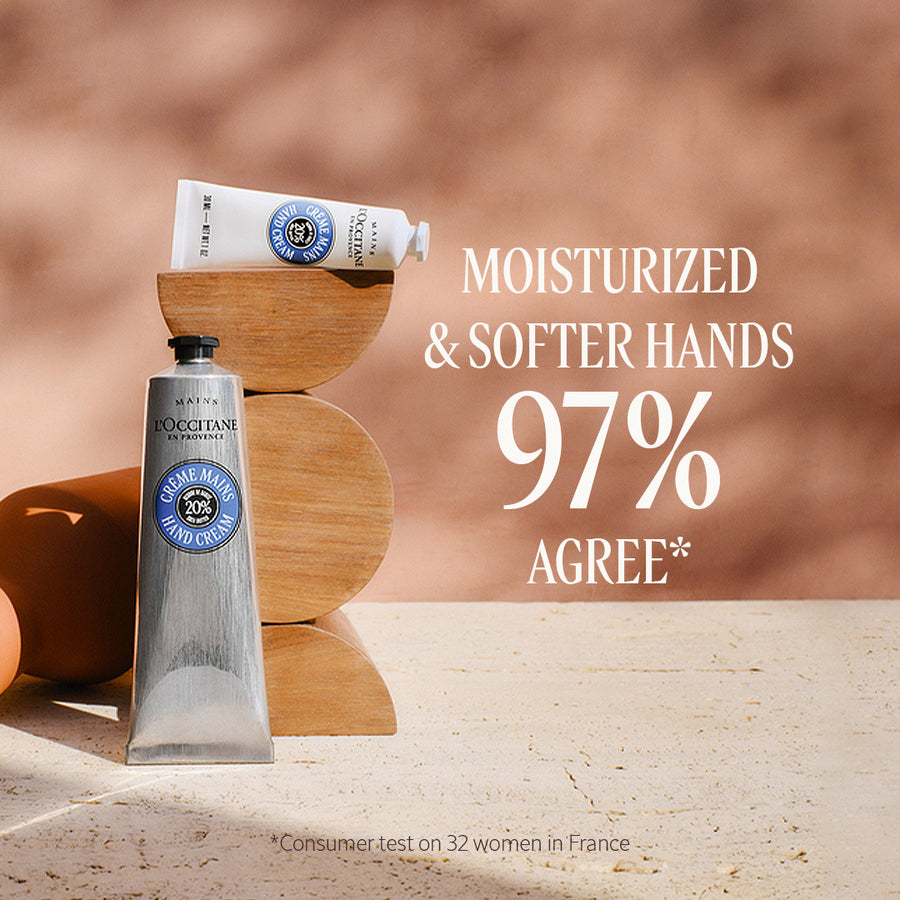
For daily dry hand care, Shea Hand Cream from L’Occitane is formulated with 20% organic shea butter for intensive hydration that absorbs well without a greasy feel.

For very dry or cracked hands, Shea Intense Hand Balm offers a richer formula for intensive recovery, ideal for overnight application. Explore the full range in L’Occitane’s Hand Cream collection.
Morning and Evening Routine for Dry Hands
Morning Routine: Protection Before Activity
Morning is the moment to build a protective layer before the hands begin facing the day's exposure. After showering or washing your hands in the morning, apply hand cream immediately while hands are still slightly damp. This creates an emollient layer that helps hands withstand the series of activities ahead.
For those who work in air-conditioned offices, this morning step is particularly important because the dry air from air conditioning will continuously pull moisture from hand skin throughout the working day. Keeping a hand cream on your desk for midday reapplication is a small step that helps significantly.
Evening Routine: Recovery During Sleep
Night time is the longest recovery window available for the skin on your hands. During 6–8 hours of sleep, hands are not exposed to water, soap, or chemicals at all. This is the most effective time to apply hand cream in a slightly thicker layer than usual.
For very dry hands or areas with cracking, try this technique: apply hand cream or hand balm evenly at night, then put on thin cotton gloves to lock in moisture overnight. Results are usually noticeable the following morning.
Daily Habits That Unknowingly Worsen Dry Hands
Beyond building the right routine, there are several habits worth paying attention to because they quietly worsen dry hand skin:
-
Rubbing hands dry aggressively with a towel instead of patting gently.
-
Washing hands with hot water, which dissolves natural oils much faster than warm water.
-
Using high-alcohol hand sanitiser too frequently without applying hand cream afterwards.
-
Leaving hands unprotected during dishwashing or when using cleaning liquids.
-
Skipping hand cream after returning from outside due to tiredness, which is actually one of the most important moments to replenish moisture.
Small changes to these habits, when done consistently, make a noticeable difference within the first 1–2 weeks.
FAQs About How to Care for Dry Hands
1. What should I use for dry hands?
Choose a hand cream with a rich emollient base such as shea butter or plant oils that support the skin barrier. Apply within 2 minutes of washing your hands while skin is still slightly damp for the best results.
2. How often should I use hand cream?
At least 2–3 times a day, always after washing your hands and before bed. If you work in an air-conditioned environment or wash your hands frequently, higher application frequency delivers better results.
3. Can I use the same hand cream in the morning and at night?
Yes. The same product can be used morning and night, just in different amounts. At night, a thicker application is appropriate because hands have more time to absorb it.
4. What is the difference between hand cream and hand balm?
Hand cream has a lighter texture and is suitable for daily use. Hand balm is richer and more occlusive, ideal for very dry or cracked hands, or for intensive overnight care.
5. How long before results from dry hand care become noticeable?
Basic softness is felt within 1–2 days of consistent use. More significant improvements in texture, including reduced roughness and cracking, are usually visible after 1–2 weeks of a regular routine.


